
CBRN Radiation Detection UAV and UGV Payloads
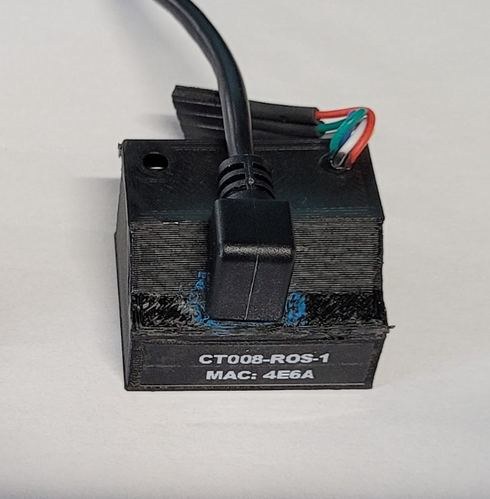
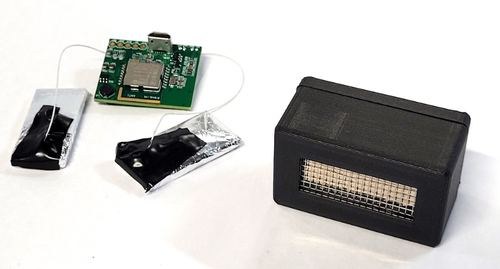
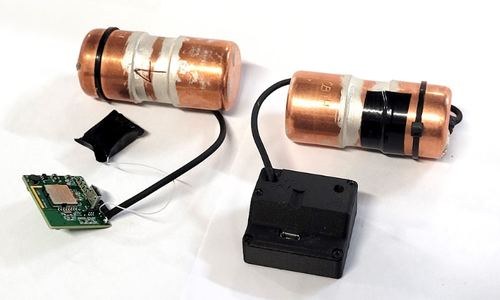
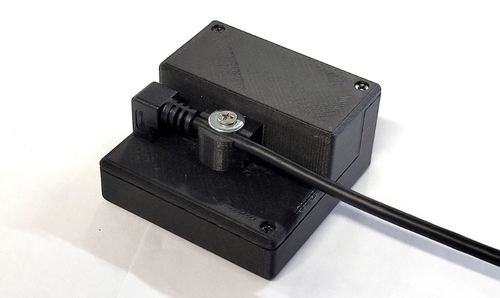
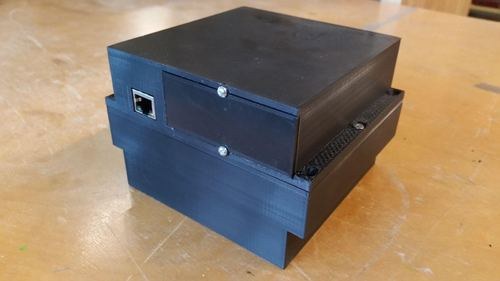
Environmental Instruments Canada’s radiation detection payloads are a high-performance lineup of six compact, low-power detectors purpose-built for seamless integration with unmanned ground vehicles (UGVs) and unmanned aerial vehicles (UAVs), alongside a handheld companion unit for ground crews. Every drone payload shares one interface: a standard 5V USB connection drawing power on the milliwatt scale, and native ROS 2 sensor nodes delivered as a Python package that publish dose or count rate and alarm status at a configurable 1–60 second interval. The same USB virtual-COM interface means the detectors are just as readily integrated into other, non-ROS systems.
Every unit in the series is a solid-state detector — no gas fill, glass envelope, or mica window — and select payloads have been tested to MIL-STD-810H methods covering extreme low pressure, temperature extremes, vibration, and shock. Lighter payloads mean longer range and longer scanning time on every mission.
Series Overview
- Lightweight: Weight ranging from 30 g to 600 g
- Multi-Threat Detection: Alpha, beta, gamma, and neutron
- Operational Profiles: Ambient monitoring, surface contamination, and plume detection
- Low SWaP: Power draw on the milliwatt scale
- Ultra-High Sensitivity: Up to 115,000 CPM/(µSv/h)
- Durable: Select payloads completed MIL-STD-810H tests for extreme pressure, temperature, vibration, and shock
- Extreme Measurement Range: Up to 10 Sv/h
The Series at a Glance
Wide-Range Gamma Detector
Indicated use: Autonomous radiological survey and dose-rate mapping, from environmental background through emergency-response fields.
A CsI(Tl) scintillator for sensitive background work and a plastic scintillator reaching 4.5 Sv/h give one continuous measurement curve, with an algorithm comparing the two responses to correct for energy dependence. At 30 g and ~25 mW, it’s the lightest payload in the series.
Best for: Dose-rate mapping and emergency response across the widest dynamic range.
Contamination and Plume Detector
Indicated use: Civil defence and first-response teams mapping airborne plumes and contaminated ground remotely, without entering the hazard area.
A shielded sensor counts gamma only while an unshielded sensor counts alpha, beta, and gamma together; the difference between the channels immediately shows whether the platform is inside or outside a plume. 36 g, 19.5 mW, potted solid-state.
Best for: Plume tracking, surface contamination survey, hazard-area mapping.
Thermal Neutron Detector
Indicated use: Neutron search and source localization — a solid-state alternative to ³He and BF₃ proportional tubes, with no pressurized gas fill and no high-voltage supply.
A ⁶LiF/ZnS(Ag) scintillator on a SiPM counts thermal neutrons while an integrated CsI(Tl) gamma sensor flags cross-talk, holding 0 CPM on the neutron channel in Cs-137 fields up to 3 mSv/h.
Best for: Special nuclear material search and neutron source localization.
Gamma Spectrometer
Indicated use: Isotope identification at standoff — separating a medical source from a fuel-cycle or industrial source before anyone approaches.
A SrI₂(Eu) crystal on a 2×2 SiPM array feeds an on-board multi-channel analyser that sorts each event into one of 4096 energy bins, resolving better than 4% FWHM at 662 keV. Spectra are published over ROS 2 as ANSI N42.42 XML or CSV.
Best for: Threat discrimination and isotope identification at standoff.
High Sensitivity Gamma + Spectrometer
Indicated use: Airborne gamma survey for low-level radiation — a single payload combining high-sensitivity gamma, gamma spectrometer, and high-range gamma detection with onboard GPS and environmental monitoring.
Combines high-sensitivity and high-range gamma counters with a gamma spectrometer, GPS, and temperature, humidity, and pressure sensors, at 600 g.
Best for: Gamma survey.
CT008-F Contamination Detector
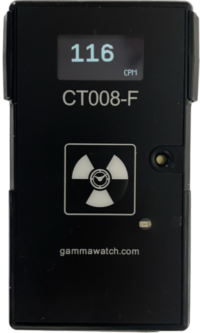
Indicated use: Handheld contamination frisking, sample counting, and surveying of hard-to-reach surfaces — a battery-powered companion unit for personnel on the ground rather than a drone payload.
A plastic scintillator and SiPM sit behind a hinged shield: closed, it reads gamma only; opened, it reads alpha, beta, and gamma through a 5.5 cm² window. One button drives an OLED display, and Bluetooth Low Energy pairs it to the GammaGuard app for a bigger display, GPS-tagged data logging, and remote alerts up to 40 m away. 75 g including its two AAA batteries.
Best for: Handheld contamination frisking and field surveying.
| Feature | Wide-Range Gamma Detector | Contamination and Plume Detector | Thermal Neutron Detector | Gamma Spectrometer | High Sensitivity Gamma + Spectrometer | CT008-F Contamination Detector |
|---|---|---|---|---|---|---|
| Primary Function | Wide-range gamma dose rate | Contamination and plume detection | Thermal neutron detection | Gamma spectroscopy / isotope ID | Airborne gamma survey for low-level radiation | Handheld contamination frisking and surveying |
| Radiation Detected | Gamma | Alpha, beta, gamma | Thermal neutron + gamma | Gamma (spectroscopic) | Gamma | Alpha, beta, gamma |
| Detector Technology | CsI(Tl) 7×7×15 mm + plastic 7×7×5 mm, SiPM | ZnS and plastic scintillators, SiPM | ⁶LiF/ZnS(Ag) neutron, CsI(Tl) gamma | SrI₂(Eu) 14×14×25.4 mm on 2×2 SiPM array | Gamma spectrometer [SrI₂(Eu) or CsI(Tl)]; 78 cm³ CsI(Tl) scintillator; 1 cm³ plastic scintillator | Plastic scintillator, silicon photomultiplier |
| Sensitivity (Cs-137) | 1555 CPM/(µSv/h) CsI(Tl); 160 CPM/(µSv/h) plastic | 260 CPM/(µSv/h) | ~6 CPS/nv neutron; 1555 CPM/(µSv/h) gamma | 7,500 CPM/(µSv/h) | 115,000 CPM/(µSv/h) | 260 CPM/(µSv/h) |
| Measurement Range | 2000 µSv/h (CsI) / 4.5 Sv/h (plastic) | 0 to 10 Sv/h | ≥145,000 CPM neutron; 2000 µSv/h gamma | 1.6 mSv/h counter; 29 µSv/h spectrometer | High sensitivity: 10 µSv/h; Low sensitivity: 2 Sv/hr | 0 to 10 Sv/h, 1000 Rad/h, 4,000,000 CPM |
| Resolving Time | ~15 µs CsI / ~11 µs plastic | 18 µs | — | 15 µs counter / 300 µs spectrometer | 12.5 µs | 15 µs |
| Mass / Volume | 30 g / 16.1 cm³ | 36 g / 37.9 cm³ | 135 g / 24.4 cm³ unit + 49.5 cm³ tube | 77 g / 71.9 cm³ | 600 g | 75 g (incl. batteries) / 5.5 × 9.5 × 2 cm |
| Operating Temperature | −20 to +50 °C | −20 to +50 °C | −20 to +55 °C | −20 to +55 °C | −20 to +50 °C | — |
| MIL-STD-810H | 500.6, 501.7, 502.7, 503.7, 514.8, 516.8 | 500.6, 501.7, 502.7, 503.7, 514.8, 516.8 | 500.6, 501.7, 502.7, 503.7, 514.8, 516.8 | 500.6, 501.7, 502.7, 503.7, 514.8, 516.8 | — | — |
| Best Suited For | Dose-rate mapping and emergency response across the widest dynamic range | Plume tracking, surface contamination survey, hazard-area mapping | Special nuclear material search and neutron source localization | Threat discrimination and isotope identification at standoff | Gamma survey | Handheld contamination frisking and field surveying |
Specifications subject to change without notice.